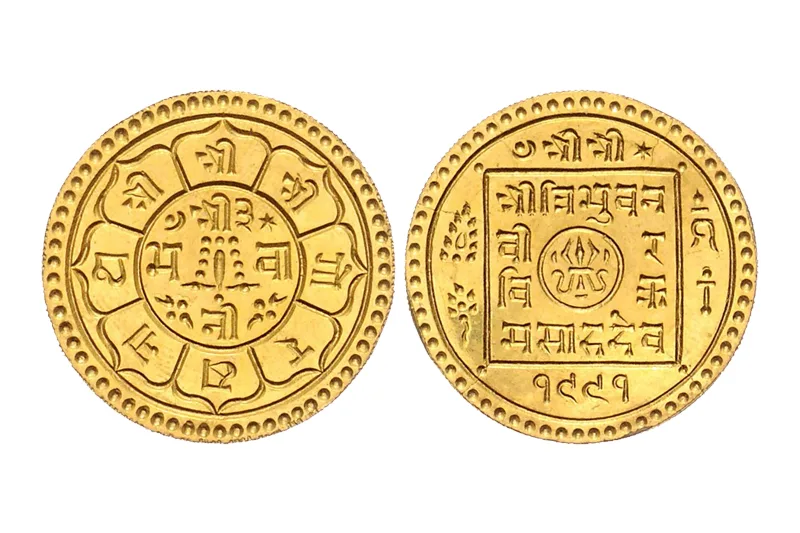
How Jewellery Price Is Calculated in Nepal - What You Actually Need to Know
Fine gold rate, karat, grams, making charge - how a bill gets built, in the way Nepali families actually buy.
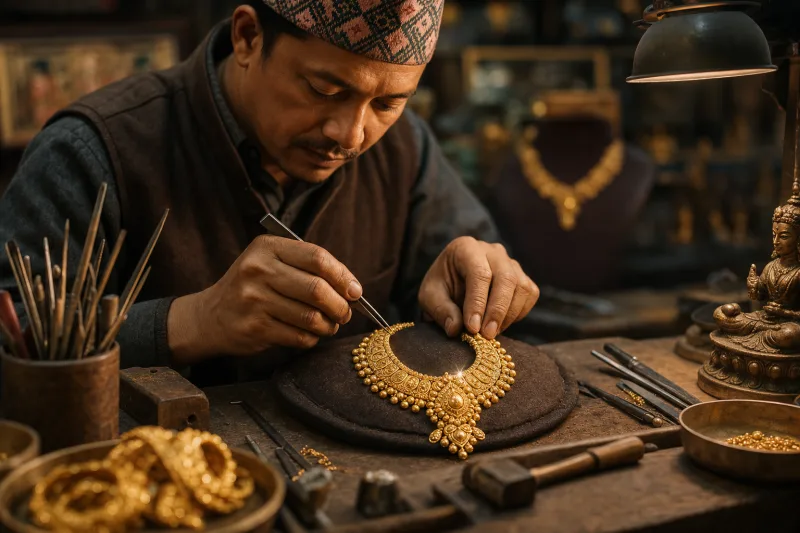
Most people walk into a jewellery shop with a rough idea of what they want - a necklace for a wedding, earrings for a daughter's bridal set, maybe a simple chain. Then a number appears on the counter and it either makes sense or it doesn't. This guide is for the second case.
The method counters use hasn't really changed. Today's gold price Nepal board shifts with the market, but the calculation underneath is stable: start with the fine-gold reference, bring it down for 22K or 18K, then add making charge and anything else the shop includes.
Three layers, not one number
Every jewellery quote has three parts:
Metal - what the gold (or silver) itself costs at today's rate for that purity. Labour - what the shop charges to make the piece. Extras - stones, any wastage on custom work, taxes if itemised.
Most arguments at the counter happen because these get packed into one round number. If you can't see the three layers separately, ask for them before you agree to anything.
Step 1 - Find today's metal rate
Check the Nepal gold rate page for the published fine (24K) price per tola. That's the base most dealers start from before they adjust for purity.
For silver pieces, the same idea applies - use the silver rates page.
Step 2 - Match purity to your ornament
Retail jewellery is almost never 24K. Most daily-wear pieces are 22K - often called tejabi or tejapabi in shops and family conversation. Harder settings like diamond rings tend to be 18K.
A rough sense of the numbers: 22K carries about 22 - 24 of the fine-gold value per gram; 18K carries about 18 - 24. You don't need to memorise fractions - the gold karat purity calculator converts "fine gold NPR per gram" to "22K NPR per gram" in a few taps.
Step 3 - Multiply by grams
Get the net gold weight for the piece - meaning gold only, with stones excluded or estimated separately. Then:
Metal cost - (NPR per gram at your karat) - (grams of gold)
If a shop quotes in tola or lal instead of grams, convert once at the start and stick to it for the whole conversation. The Nepal gold-silver unit converter handles tola, gram, and lal so the whole family group chat can use the same numbers.
Step 4 - Add making charge (Jarti)
Making charge can be a percentage of the metal value, a flat rate per gram, or a fixed price per piece. Two shops using the same gold ladder can still quote very different totals just from this line.
The jewellery making charge calculator lets you model how a quote changes under different making structures before you sit at the counter.
Step 5 - Stones and wastage
If diamonds or other gems are set separately, the invoice should say so clearly. Custom orders sometimes include a small wastage allowance for solder and filing - ask what percentage that is, and whether it's already folded into the quoted weight.
A worked example - Nepal style
Say the ladder shows fine gold at NPR 240,000 per tola today (a round number for illustration only - not a live rate). One tola is 11.66 grams, so fine gold per gram is roughly NPR 20,583.
For a 22K necklace weighing 25 grams of gold (stones excluded):
- 22K fraction - 22 - 24, so metal per gram - 20,583 - (22 - 24) - NPR 18,868/g
- Metal subtotal - 18,868 - 25 - NPR 471,700
If the shop adds 8% making charge on top, that's roughly NPR 37,700 more before any taxes or stone costs. A clean receipt should show these lines separately - not fold them into one number.
When you do this for real, pull today's rate from our gold rate Nepal page. The example is just to show where the numbers come from.
Quick tools
- Gold karat purity calculator - converts fine gold to 22K or 18K rate
- Jewellery price calculator - models percentage or flat making charge
- Nepal gold-silver unit converter - settles tola vs gram before the bill gets confusing
- Jewellery catalogue - worth browsing styles before comparing quotes
Before you commit - a few things worth doing
Ask for weight and karat in writing before you pay a deposit. Many disputes come down to verbal agreements no one wrote down.
Photograph hallmarks when you can, especially on bridal sets. This is useful if you ever need repair work done elsewhere.
Don't compare pieces across purities without adjusting - an 18K chain and a 22K set will never price the same way, even at the same weight.
Watch how package deals are worded. If metal and labour are combined into one figure, ask what happens if gold moves between order day and pickup day. It's a reasonable question and any reputable shop will answer it.
A note on price movement
Gold rate Nepal moves when international bullion shifts, when the rupee moves against the dollar, and when local demand tightens around festivals. But purity and making charge explain most of the price gap between two shops on the same street. For more on how Nepali retail rates connect to global headlines, see our Nepal retail gold vs global spot guide. For a broader buying checklist, see the Nepal gold buyer checklist.
Common questions
How is gold price calculated in Nepal for jewellery? Today's fine-gold NPR rate, adjusted for karat, multiplied by grams, then adding making charge and any stone or wastage lines. Ask for each line separately on the estimate.
What's the difference between 22K and 24K? 24K is pure gold - the benchmark. 22K has a small alloy blend for durability, which is why it's standard for daily-wear ornaments. The gold content is still high; it's just not "full fine" per gram.
How much is 1 tola gold worth? It changes every day. Take "fine gold per tola" from the live gold rate page - that's the usual starting point before purity and labour.
Why did my quote come out different from my cousin's? Different weight, karat, making rate, or stone settings - even small differences add up. Get both quotes to show the same grams and karat first, then compare the labour line.
Should I wait if the total feels high? Some families split purchases across a few weeks. Others lock in once the shop confirms weight in writing. There's no rule either way - just avoid agreeing to a number you can't account for on paper.
What still reads as AI-generated in the draft?
- The three-part structure ("Three layers, not one number") is clean to the point of feeling assembled - a real writer might fold one of those points in naturally rather than leading with a listicle header.
- "Most arguments at the counter happen because..." - accurate, but the phrasing is a bit omniscient-narrator.
- The tips section still has a slight bulleted-wisdom-listicle feel.
- The tone is even throughout - no variation between the casual parts (family group chat) and the instructional parts.
Now make it not obviously AI-generated.
How Jewellery Price Is Calculated in Nepal
Fine gold rate, karat, grams, making charge - how a bill gets built, the way Nepali families actually shop.
Most people walk into a jewellery shop with a rough idea of what they want - a necklace for a wedding, earrings for a bridal set, maybe just a simple chain. Then a number appears on the counter. Either it makes sense or it doesn't.
This is for when it doesn't.
The method counters use is fairly stable. The gold price Nepal board shifts daily with the market, but the calculation underneath hasn't really changed: start with the fine-gold reference, bring it down for 22K or 18K, add making charge and anything else the shop includes.
The three layers in every quote
Every jewellery bill has three parts: metal, labour, and extras (stones, wastage, taxes if itemised).
Most disagreements at the counter happen because those three get packed into one round number. If you can't see them separately, ask before you agree to anything.
Step 1 - Get today's metal rate
Open the Nepal gold rate page and note the fine (24K) price per tola. That's the base most dealers start from before adjusting for purity.
For silver pieces, the same idea - use the silver rates page.
Step 2 - Match purity to your piece
Retail jewellery is almost never 24K. Most daily-wear ornaments are 22K - called tejabi or tejapabi in shops and in most family conversations. Harder settings like diamond rings tend to be 18K.
Rough sense of the numbers: 22K carries about 22 - 24 of the fine-gold value per gram; 18K carries about 18 - 24. The gold karat purity calculator handles the conversion if you'd rather not do fractions while haggling.
Step 3 - Multiply by grams
Get the net gold weight - gold only, stones excluded or estimated separately. Then:
Metal cost - (NPR per gram at your karat) - (grams of gold)
If the shop quotes in tola or lal, convert once and stick with it. The Nepal gold-silver unit converter handles tola, gram, and lal - useful when half the family is in Kathmandu and half is messaging from abroad with different units in their heads.
Step 4 - Add making charge (Jarti)
This is where two shops using the same gold ladder can still quote completely different totals. Making charge can be a percentage of the metal value, a flat rate per gram, or a fixed price per piece.
Model a few scenarios on the jewellery price calculator before you go in. It helps to recognise a fair spread when you see one.
Step 5 - Stones and wastage
If diamonds or gems are set separately, the invoice should say so clearly. Custom orders sometimes include a small wastage allowance for solder and filing - ask what percentage applies and whether it's already in the quoted weight.
A worked example
Say the board shows fine gold at NPR 240,000 per tola (a round number for illustration - not a live rate). One tola is 11.66 grams, so fine gold per gram comes to roughly NPR 20,583.
For a 22K necklace with 25 grams of gold (stones aside):
- 22K fraction - 22 - 24, so metal per gram - NPR 18,868
- Metal subtotal - 18,868 - 25 - NPR 471,700
Add 8% making charge and you're looking at roughly NPR 37,700 more before taxes or stone costs. A clean receipt shows those lines separately. If yours doesn't, ask.
For the real calculation, pull today's rate from the gold rate Nepal page.
Before you pay
Get weight and karat in writing before any deposit. Most disputes come down to verbal numbers no one noted down.
Photograph hallmarks - especially on bridal sets. Useful later if you need repairs elsewhere.
Don't compare across purities without adjusting. A light 18K chain and a heavy 22K set will never price the same way.
Watch bundled quotes. If metal and labour are in one figure, ask what happens if gold moves between order day and pickup day. Any decent shop will have a clear answer.
On price movement
Gold rate Nepal shifts with international bullion, rupee-to-dollar movement, and local festival demand. But purity and making charge explain most of the gap between two shops next door to each other. For more on how local rates connect to global headlines, see the Nepal retail gold vs global spot guide. For a fuller buying checklist, see the Nepal gold buyer checklist.
Common questions
How is gold price calculated in Nepal for jewellery?
Today's fine-gold NPR reference, adjusted for karat, multiplied by grams, plus making charge and any stone or wastage lines. Ask for each line on the estimate - not just the total.
What's the difference between 22K and 24K?
24K is pure gold - the benchmark rate. 22K has a small alloy addition for strength, which is why it's standard for everyday ornaments. The gold content is still high; it just isn't "full fine" per gram.
How much is 1 tola gold worth?
Changes every day. Take "fine gold per tola" from the live gold rate page and go from there.
Why did my quote differ from my cousin's?
Different weight, karat, making rate, or stone settings - small differences compound. Get both quotes to show the same grams and karat, then compare the labour line.
Should I wait if the total feels high?
Some families split purchases across a few weeks. Others lock in once the shop confirms weight in writing. There's no universal rule - just don't agree to a number you can't account for on paper.